
Benefits of CNC coolant sump vacuum cleaning
By combining fluid removal, solids collection, and controlled transfer, a sump vacuum can shorten cleanout, reduce fluid handling, and make settled contamination easier to remove. Results vary with sump access, fluid condition, solids loading, and equipment configuration.
Scroll horizontally to compare all columns.
| Maintenance objective | How a sump vacuum helps | What determines the result |
|---|---|---|
| Reduce cleanout time | Vacuum pickup and controlled discharge can move coolant and settled material with fewer manual transfer steps. | Sump volume, access, solids loading, hose route, tank capacity, and the amount of cleaning required. |
| Reduce fluid handling | A defined pickup, tank, and discharge path can replace repeated use of small pumps, buckets, or temporary containers. | Equipment compatibility, receiving container, discharge method, and your facility's procedures. |
| Remove settled material | A chip basket, filter bag, or other installed filter can collect chips, fines, swarf, and sludge from areas the pickup tool can reach. | Contaminant size and shape, filter or basket selection, access, and equipment limits. |
| Improve inspection access | Removing fluid and deposits makes it easier to inspect the sump, screens, pump inlets, and return paths that are safely accessible. | Machine design, safe access, isolation, and your maintenance procedures. |
| Preserve serviceable coolant | Filtered transfer can retain coolant that is confirmed suitable for return or further treatment. | Fluid condition, concentration, contamination, supplier limits, and the required treatment stages. |
| Support stable operating conditions | Removing accumulated contamination restores usable sump capacity and helps keep coolant circulating under more consistent conditions. | Leak control, coolant chemistry, water quality, filtration, oil separation, and ongoing monitoring. |
How does a coolant sump vacuum work?
A purpose-built sump vacuum can combine several handling steps, depending on its configuration:
- Pick up the coolant and contamination. A suction hose draws fluid, chips, fines, and sludge from accessible areas of the machine reservoir.
- Separate the solids. Depending on the unit, a chip basket or filter bag collects the chips, fines, or sludge it is designed to retain.
- Hold the collected fluid. The liquid remains in the unit's tank until it is discharged.
- Transfer the fluid. The unit can move collected coolant back to the machine, to additional treatment, or to an appropriate holding or disposal container.
A chip basket or bag filter captures solids. Finely dispersed or emulsion-stabilized tramp oil requires compatible oil-separation equipment and suitable fluid conditions. Before cleaning begins, decide whether the coolant will return to the machine, receive additional treatment, or be moved to a holding or disposal container.
When does a CNC coolant sump need physical cleaning?
Use calendar intervals as reminders to inspect the sump, then schedule cleaning according to the amount and type of contamination you find.
Common reasons to inspect and clean a sump include:
- Visible accumulation: chips, fines, or sludge are collecting in low areas or reducing usable sump capacity.
- Restricted fluid movement: screens, pump inlets, nozzles, or return passages show evidence of blockage or abnormal loading.
- Recurring contamination: odor, surface oil, residue, or fluid problems return after routine treatment.
- Coolant change or treatment: coolant needs to be removed for testing, recycling, correction, replacement, or disposal.
- Scheduled machine service: planned maintenance provides an opportunity to inspect and clean the sump safely.
These signs can have more than one cause. Check concentration, water quality, oil leaks, filtration, fluid chemistry, microbial condition, and machine operation before choosing a corrective action. If the same symptoms keep returning, use our coolant-system troubleshooting guide to narrow down the cause.
Severe or recurring contamination may call for a complete drain, clean, and recharge process. Depending on the fluid supplier's guidance and your facility's procedure, that work can include accessible sump surfaces, circulation lines, filters, a compatible system cleaner, rinsing, and fresh coolant. Sump vacuuming can support that process by removing fluid and deposits.
Purpose-built sump vacuum, shop vacuum, or transfer pump?
Choose equipment rated for the coolant, solids, volume, access conditions, hose route, and receiving container involved in the job.
Scroll horizontally to compare all columns.
| Consideration | Purpose-built sump vacuum | General wet/dry vacuum | Transfer pump |
|---|---|---|---|
| Primary role | Removes compatible coolant and accumulated solids during sump service. | Provides general liquid or debris pickup within the manufacturer's stated uses. | Moves compatible liquid between locations. |
| Solids handling | May include a chip basket and filter media selected for the expected contamination. | Debris capacity and filtration vary by model and intended duty. | Passage size and solids tolerance depend on the pump; separate collection may be required. |
| Fluid handling | Can combine pickup, storage, filtration, and controlled discharge in one portable unit. | Tank volume and emptying method may add handling steps. | Requires a compatible source, receiving vessel, hoses, and controls around the pump. |
| Best suited for | Recurring machine-sump service where both fluid and settled contamination must be removed. | Small pickup tasks involving liquids and debris the vacuum is specifically rated to handle. | Moving compatible liquid between containers during jobs focused on fluid transfer. |
What happens to the coolant after removal?
During sump cleaning, the basket or filter removes the solids it is designed to capture. Coolant condition determines whether the fluid can return to the machine, needs more treatment, should be held for evaluation, or requires disposal.
Scroll horizontally to compare all columns.
| Where the coolant goes | When it may fit | What to check |
|---|---|---|
| Return to the machine | The coolant remains within the fluid supplier's usable limits after suitable solids removal. | Have concentration and condition been checked? Is the returning fluid compatible with the machine and remaining coolant? |
| Further recycling | The fluid remains a candidate for reuse but requires additional treatment before return. | What solids or tramp oil remain, and does the coolant need concentration adjustment or other conditioning? Where will treatment and storage occur? |
| Hold for evaluation or disposal | The fluid is being removed from service or held for evaluation. | Has the coolant been evaluated under your facility's waste-handling procedures? Which container and recycling or disposal service should be used? |
A simple service record can help identify recurring leaks, increasing solids loads, and changes in cleaning frequency. Record the machine, coolant condition, removed contamination, filter condition, fluid destination, and refill.
Match the remaining condition to the right treatment
Physical sump cleaning removes accumulated coolant and deposits. Match any remaining issue to the treatment designed to address it:
- Free tramp oil at an individual reservoir: use compatible surface collection and oil-separation equipment selected for the coolant and operating conditions.
- Mixed or fine particulate: select filtration for the contaminant material, particle size, loading, flow, and required cleanliness.
- Recurring hydraulic or way-oil contamination: fix accessible leak sources, then select an oil-removal method suited to the coolant and operating conditions.
- Coolant outside its usable condition: involve the fluid supplier or qualified laboratory to determine whether correction, broader recycling, or replacement is appropriate.
- Coolant serving multiple machines: a shared recycling system must account for the combined contaminant load, required capacity, treatment stages, storage, and return flow.
For autonomous tramp-oil separation at an individual reservoir, our T.O.S.S. system provides a dedicated treatment option. For compatible machine-shop coolant serving multiple machines, our C.R.O.S.S. system provides batch, central, or hybrid recycling. Either treatment may follow sump cleaning when the coolant remains suitable for continued use.
Select and maintain sump-cleaning equipment
Questions to answer before selecting a unit
- Sump and access: record sump volume, access depth, aisle clearance, suction lift, and required hose reach.
- Fluid and contamination: identify the coolant, temperature, viscosity, chips, fines, swarf, sludge, surface oil, and unusual contamination.
- Capacity and filtration: match liquid capacity, solids capacity, and the basket or filter rating to the expected contamination and cleaning workload.
- Transfer and discharge: define where the fluid will go and confirm that the hoses, fittings, discharge method, and receiving container are compatible with the fluid and transfer distance.
- Utilities and mobility: verify the available electrical power or compressed air, floor conditions, aisle width, and required movement between machines.
- Return or refill: determine whether the work includes fluid removal, filtered return, transfer to recycling, or a separate clean-coolant refill step.
For a step-by-step view of fluid removal and machine service, see our CNC sump-cleaning application guide.
Routine care between cleaning jobs
Base service frequency on use, observed loading, and the manufacturer's instructions. Condition-based checks help preserve suction, transfer performance, and controlled fluid handling:
- Inspect the filter bag or other installed media and service it when buildup begins to restrict flow or reduce filtration performance.
- Empty and clean the chip basket before accumulated material interferes with pickup or creates a handling hazard.
- Inspect the collection tank and cleanout area for settled material that could carry into the next service job.
- Check hoses, pickup tools, fittings, valves, and seals for blockage, damage, leakage, or loose connections.
- Prevent cross-contamination when equipment moves between incompatible fluids, machines, or process areas.
- Record maintenance and any change in suction, discharge, filter loading, or collected contamination.
Green Machine options
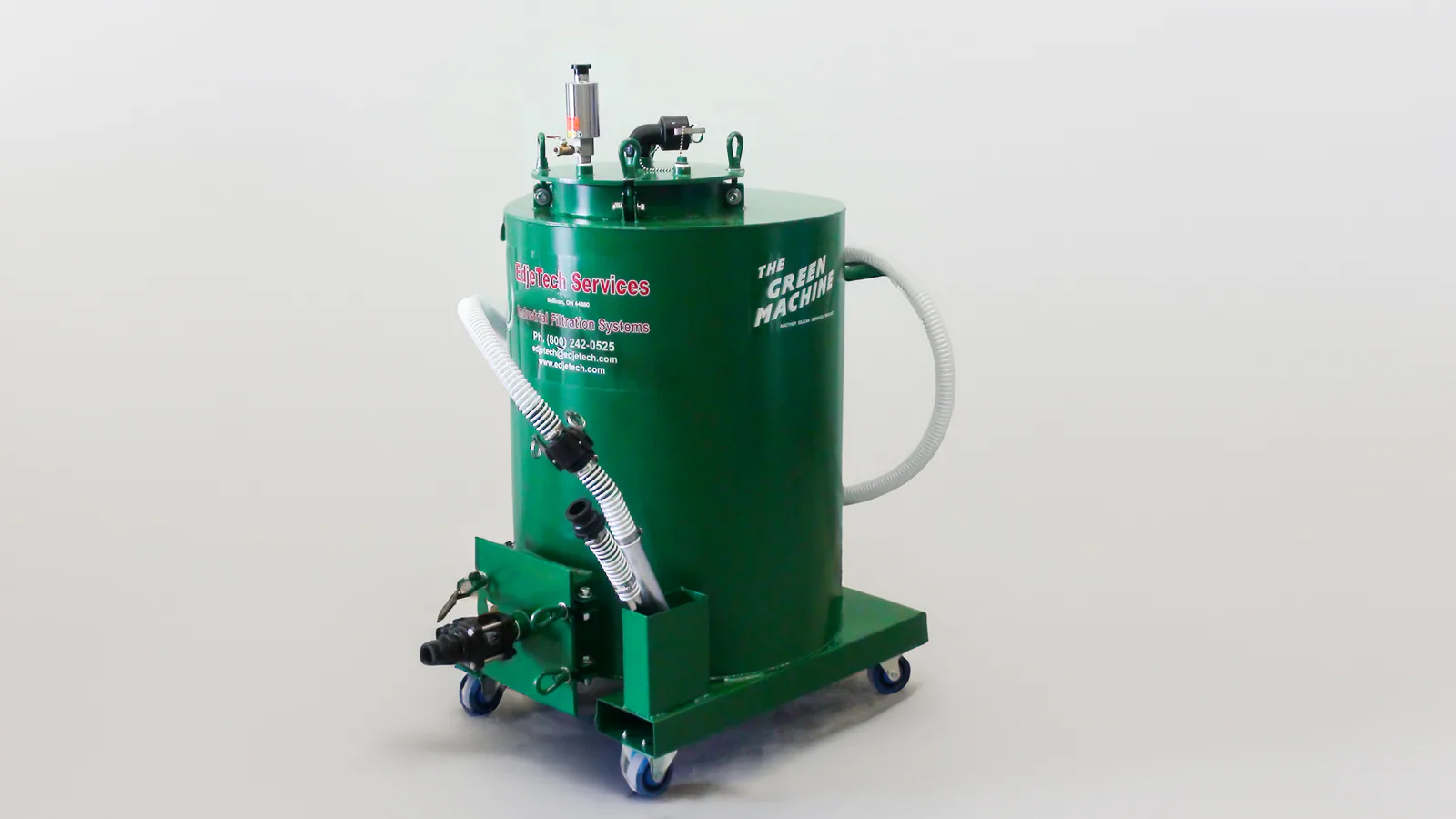
Our air-operated Green Machine sump cleaners are available with 55- or 90-gallon tanks. Standard features include a 200-micron bag filter, a one-cubic-foot chip basket, heavy-duty casters, and forklift guides. The DTS configuration adds a separate clean-fluid tank for refilling the machine after cleaning. We can help you choose a configuration based on your sump, coolant, contamination, cleaning workload, and available utilities.