
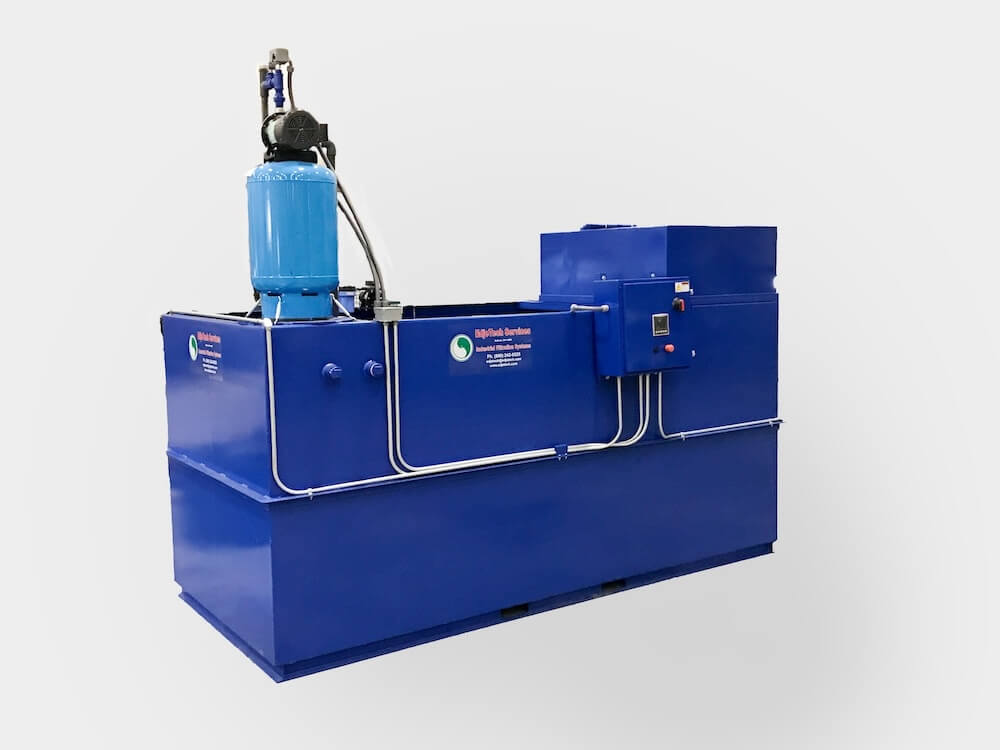
 35–40 PSI · clean supplyportable · dirty-coolant transfer99% or greater · system uptime
Central coolant
distribution & piping.
The optional Coolant Return System pumps clean coolant from C.R.O.S.S. through facility piping to supply machines across your shop. Dirty coolant is normally collected from individual sumps with portable equipment and returned to the recycling station. C.R.O.S.S. maintains clean coolant for immediate use 24/7/365.
- up to85%
- reduction in new fluid purchases
- up to90%
- reduction in waste disposal
- 99.75%
- tramp oil & particulate removed, by volume
- 24/7/365
- 99% or greater uptime · clean coolant available
Clean coolant where the shop needs it
The optional CRS distributes clean coolant from C.R.O.S.S. through facility piping. Dirty coolant is normally collected from individual reservoirs with a Green Machine or another portable transfer device and delivered to the system for processing. A configured dirty-coolant return network can also be engineered where a fully piped arrangement is required.
- Clean coolant is distributed under pressureThe CRS pumps clean coolant through the facility at 35 to 40 PSI for convenient access across the shop.
- Clean coolant is available 24/7/365C.R.O.S.S. maintains clean coolant for immediate use at 99% or greater system uptime.
- Distribution is configured to the facilityWhere clean-coolant piping is not practical, coolant can be returned to machines with portable equipment.
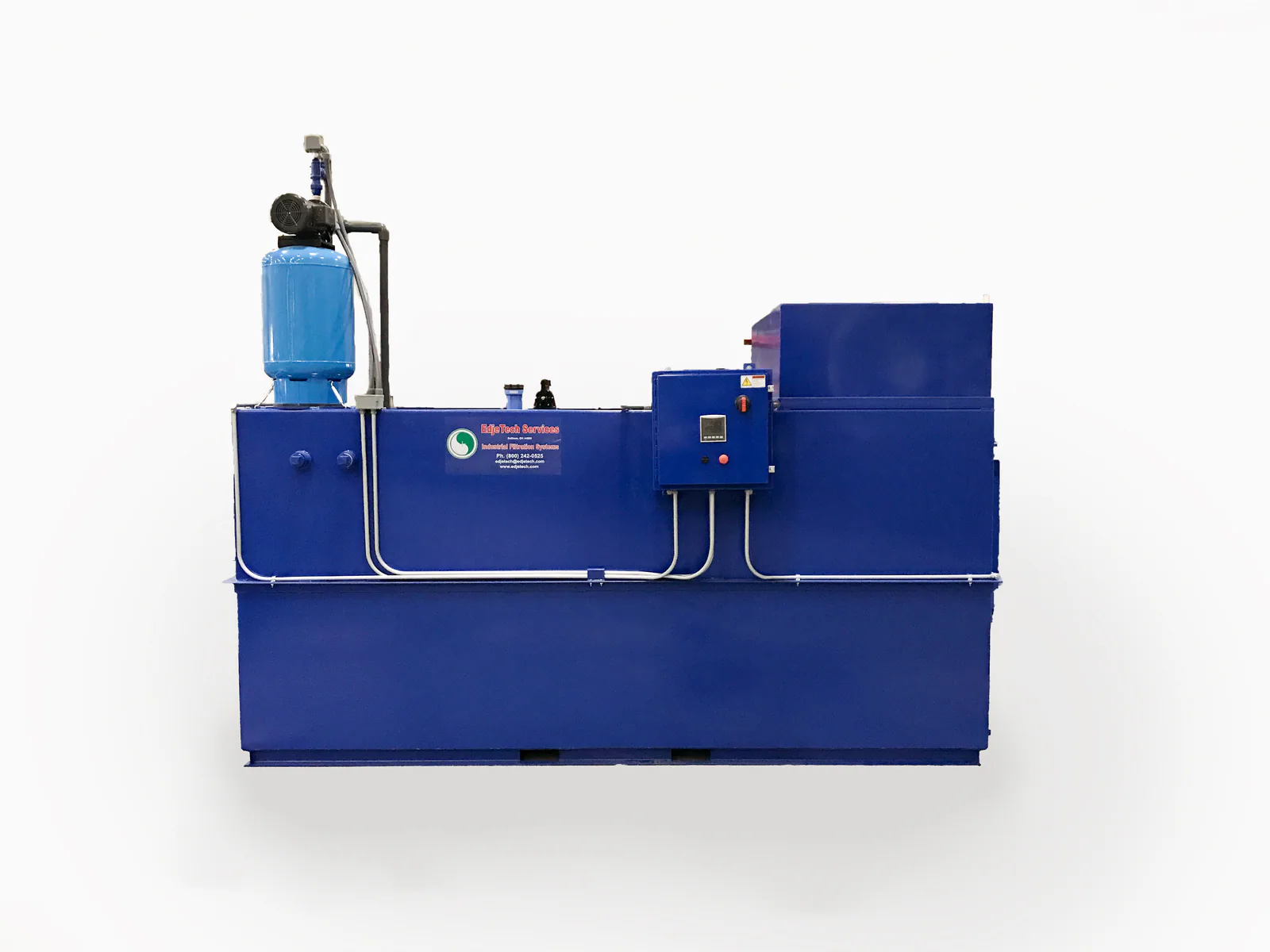
When central clean-coolant distribution fits
Central distribution requires facility piping for clean coolant, planned around the required delivery points and operating pressure. A CRS can reduce manual clean-coolant transport when the facility layout supports that network. Batch or hybrid configurations provide alternatives where a full clean-coolant distribution network is not justified.
- 01New construction or an existing clean-coolant distribution network
- 02Enough machines in fixed positions to justify the runs
- 03Machines on a common fluid family
- 04Clean coolant is needed at multiple points across the shop
- 05Facility piping is not practical for the current layoutBatch configuration →
- 06Central piping serves the main production cells, while portable transfer serves remote or secondary machinesHybrid deployment →
- 07Too few machines, or you want to move machines without re-pipingBatch deployment →
Collect dirty coolant and distribute clean coolant
In the standard workflow, portable equipment collects dirty coolant on a planned schedule and delivers it to C.R.O.S.S. for processing. Clean coolant remains available immediately rather than requiring operators to wait for each delivered batch to finish processing. The optional CRS pumps clean coolant through facility piping, while a configured dirty-coolant return network can be engineered for facilities that require a fully piped arrangement.
C.R.O.S.S. system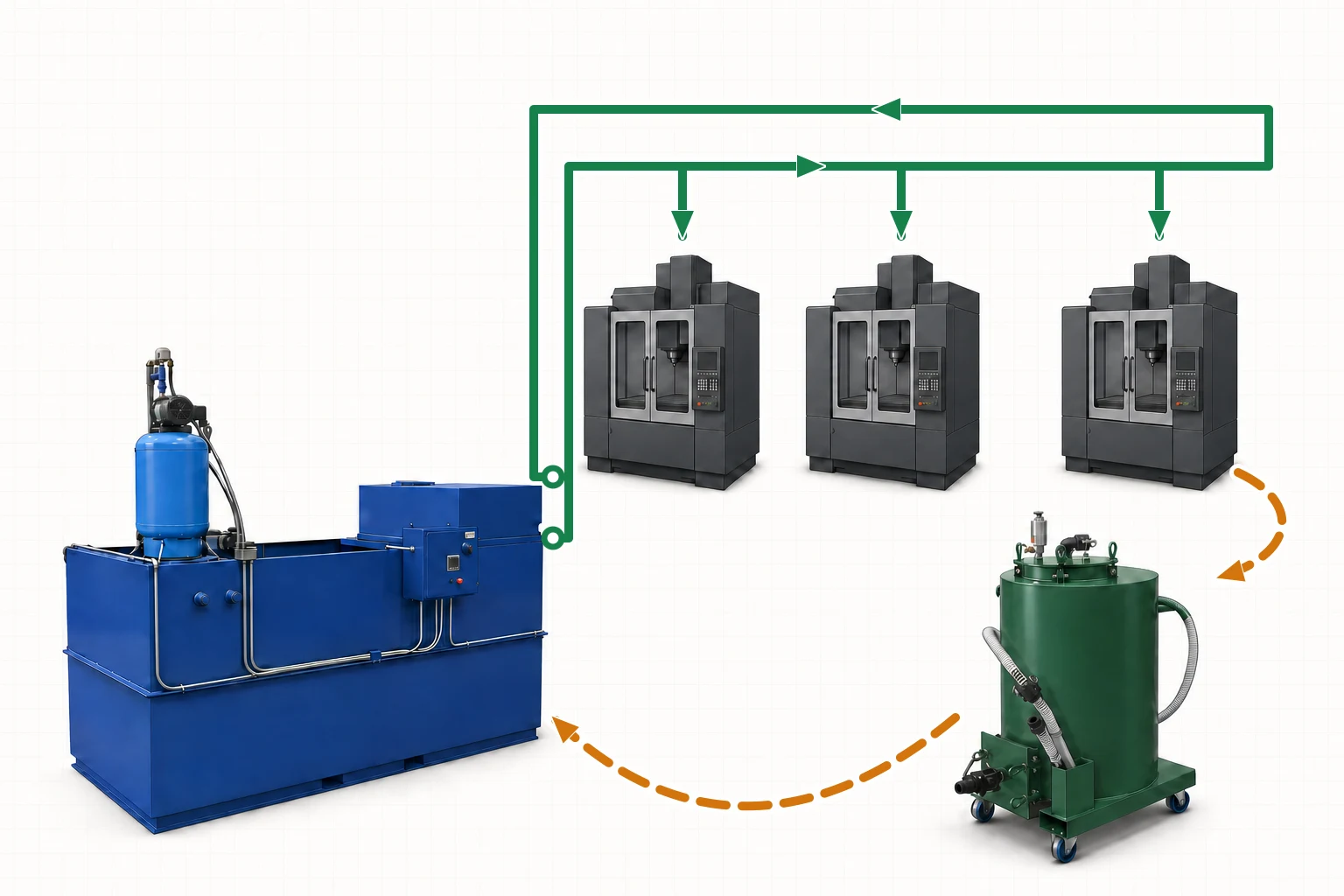 Central coolant workflow
Coolant recovery systems by operating environment
Machine shops use C.R.O.S.S. to maintain a central supply of clean coolant. Tube and steel mills use TMCRS for real-time filtration engineered around the required mill flow.
CLEAN-COOLANT DISTRIBUTION · 35–40 PSIC.R.O.S.S.C.R.O.S.S. for machine shops
C.R.O.S.S. is the central coolant recycling system for machine shops using compatible water-based coolant and requiring shop-wide recovery. It removes 99.75% of tramp oil and particulate by volume and operates at 99% or greater uptime. Optional ozone provides automated bacteria and odor control, while the optional CRS distributes clean coolant across the shop.
- Throughput
- 120–1,500 GPH, six models from the 250 to the 2200
- Clean supply
- 35–40 PSI through the optional Coolant Return System
- Typical shops
- Contract and captive machine shops using compatible water-based coolant, with CNC, conventional, or mixed operations including precision grinding and milling
 BUILT TO SPECTMCRS
TMCRS for tube and steel mills
The real-time recovery system for tube and steel mills. Hydrocyclone, magnetic separation, paper-bed filtration, oil/water separation, post-filtration, heat exchange, and cooling operate as an integrated process at the flow rate required by the mill. Recovered oil contains 2% water or less.
- Capacity
- Engineered around the mill's required flow; systems have processed up to 990 GPM and can scale to 1,600 GPM or more
- Recovered oil
- ≤ 2% water; potential reclamation or reuse depends on composition, waste classification, and recipient requirements
- Typical plants
- Tube and pipe mills and steel mills, with heavy chip and tube-oil load
C.R.O.S.S. provides facility-level coolant recovery, while T.O.S.S. treats coolant at an individual reservoir. Operating scope, coolant volume, contaminant load, and facility layout determine the appropriate equipment.
Compare coolant equipment →What the system delivers
Use your facility's current fluid and disposal costs to estimate potential savings for the selected system.
- Fluid spend
- up to85%
- Reduction in new coolant purchases
- Disposal
- up to90%
- Reduction in waste-disposal cost
- Separation · C.R.O.S.S.
- 99.75%
- Tramp oil & particulate removed, by volume
- Recovered oil · TMCRS
- ≤2%
- Water content; disposition is subject to composition and recipient requirements
- Availability · C.R.O.S.S.
- 24/7/365
- Clean coolant at 99% or greater uptime
- Payback
- Your inputs
- Estimate from quoted investment and current fluid, disposal, labor, and maintenance costs
Clean-coolant piping, power, water, and floor space
- Clean-coolant distribution
- 35–40 PSI supplyThe optional CRS pumps clean coolant through facility piping to the required delivery points.
- Electrical & water
- Single or three phaseSingle-phase on the 250 and 450, three-phase on the 850 and up. C.R.O.S.S. ships in startup condition, needing only power and a water supply for the proportioner.
- Footprint
- Sized to flow rateFrom the 250 (about 2 GPM, 120-gallon clean tank) to the 2200 (about 25 GPM, 1,100-gallon clean tank).
Reduce coolant consumption and disposal
C.R.O.S.S. removes 99.75% of tramp oil and particulate by volume. Facilities can reduce new coolant purchases by up to 85% and waste-disposal costs by up to 90%.
Results depend on fluid condition, contaminant load, operating practices, and system configuration.
- 40+ yrs
- Industrial fluid-system experience
- Engineering review
- Coolant compatibility and system configuration confirmed
- 99.75%
- Tramp oil & particulate
removed, by volume - up to 85%
- Reduction in new coolant
purchases, per year
Planning central coolant recycling
- 01
Does clean-coolant distribution have to serve the whole shop?
No. Clean-coolant piping can serve selected cells while portable equipment supports machines outside the distribution area. This creates a hybrid configuration.
Hybrid configuration → - 02
Can EdjeTech evaluate my coolant and contaminant load?
Yes. EdjeTech reviews coolant compatibility, chip load, operating conditions, and required throughput before recommending a system configuration.
Talk to an engineer → - 03
What information is needed for a quotation?
Start with your contact details and the goal of the project, such as recovering coolant from existing machines or serving a new cell. EdjeTech will work through system capacity, coolant collection, and delivery with you.
Estimate potential savings →
Recover coolant across your shop
Reduce coolant replacement and waste handling by recovering used fluid from machines across your shop.
- Savings estimate
Savings calculator
Use machine count, coolant spending, and disposal cost to estimate savings and payback.
Estimate potential savings → - Select coolant equipment
C.R.O.S.S. or T.O.S.S.
Compare facility-level recovery with fixed and portable reservoir treatment.
Compare equipment → - Equipment guidance
Talk to an engineer
Plan collection and clean-fluid delivery for existing machines or new cells.
Talk to an engineer → - Technical overview
Central coolant filtration guide
Review the central recycling process, operating requirements, and clean-coolant distribution options.
Read the guide →